Is Philips Hue Worth It? One Year In, Here's My Take
Is Philips Hue worth it? After a year running the bridge, bulbs and outdoor sensor through an Estonian winter, here's my verdict and what it costs.
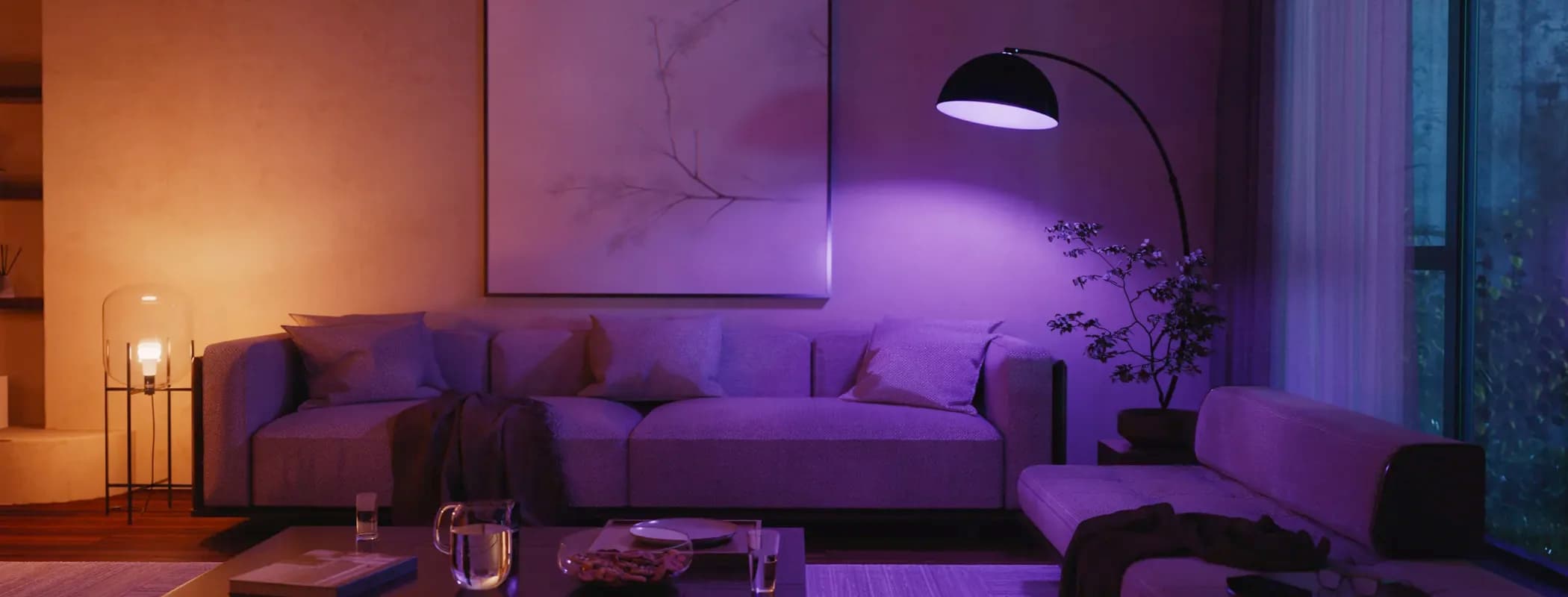
Philips Hue is the easy recommendation in smart lighting. It's also the expensive one. So I tested it before recommending it: bridge, E27 bulbs indoors, the outdoor motion sensor through a full winter in Estonia. This is my take on whether it's worth it for a smart home in Estonia.
Why Philips Hue over cheaper smart bulbs
Hue has a reputation as a premium brand. There are cheaper smart bulb systems out there, and some of them work fine. But Hue has been doing this since 2012, the app is genuinely good, and the lumen output on their bulbs is high. Bright enough to actually light a room, not just create a mood. That matters here in Estonia, where winters are dark and you need your indoor lighting to do its job.
I also wanted something that would still work in five years. Hue's ecosystem isn't going anywhere. It runs on Zigbee, a proven mesh protocol, works with Google Home, Alexa, and Apple Home, so it fits into whatever setup you already have.
Setting up the Philips Hue bridge
The Philips Hue bridge takes about ten minutes to get running. Plug it into your router, download the app, and scan the QR code on your bulbs. Then they start appearing in the app. There's no fiddling with wifi passwords or pairing codes. It just works, which sounds like a low bar but isn't, in this category.
I started with two E27 bulbs and the bridge. That's almost identical to the starter kit I stock at Klarq. I didn't go with the color bulbs at first. From there the system grows naturally. You add what you need, when you need it.
You can run a few Hue bulbs over Bluetooth without the bridge, but you lose scheduling and remote access, which for me is the whole point.
Running the outdoor motion sensor, through an Estonian winter
This is the one people ask about most. Smart home devices are typically tested in California or the Netherlands. Neither of those is -15°C in February with snow.
Mine has been mounted outside since October 2025. It ran through the entire 25/26 winter without a single issue. No dropouts, no false triggers, no battery problems. It reads movement and comes on by itself, no input from anyone. All I had to do was put it up, put a Hue bulb in the socket, and set the sensitivity in the app.
I put it there for a simple reason: my dog needs light in the backyard when he goes out in the evening. A small thing. It works every time. I set it and forget it.
The schedule is active from 15:00 - 00:00, meaning the sensor doesn't react to anything outside that window. It doesn't come on during the day when the sun is out, and it doesn't come on at night when the dog isn't out.
Setting schedules and why it actually matters
The scheduling feature is where Hue justifies the price beyond just being a nice lamp.
My wife and I travel for work, sometimes for a week at a time. November is the worst for it, which in Estonia means leaving the house in near-total darkness by mid-afternoon. When my mother-in-law comes to look after our dog, I don't want her to think about the lights at all.
The outdoor sensor takes care of itself. Indoors I set a simple schedule for the main light: on in the morning until she leaves for work, then back on in the evening when she gets home, and off again at bedtime. Nobody has to remember anything or touch the app. But if she wants to adjust anything in between, the dimmer switch is right there next to the wall. It looks and works like a normal switch. She used it once and never asked about it again.
That's the part that's hard to explain on a spec sheet. Hue works for people who want full app control and for people who just want a switch on the wall. Both at the same time, in the same house.
What a Hue starter kit actually costs
The starter kit I stock is the bridge plus two E27 bulbs and a dimmer switch. Not the cheapest way to start, but it covers all the basics. You can see the current price on the product page below. The bridge is a one-time cost. Once you have it, adding bulbs and accessories is the only ongoing expense.
So, is Philips Hue worth it?
Yes, with one caveat. Hue is worth it if you want something that works without thinking about it. The app is good, the scheduling is reliable, the build quality is real. I haven't touched the setup in months. It just runs.
The caveat is price. Hue bulbs cost more than cheaper alternatives. If you want to light an entire house on a budget, TP-Link Tapo is the most common alternative and it works. But if you want two or three rooms done properly with a system that will still be supported in 2030, Hue is the right choice.
I tested it because I want to recommend products that just work. It should be easy and customizable for me, but also for my wife, my mother-in-law, and anyone else who might be in the house. Hue does that. It just works.
Common questions about Philips Hue
Do you need the Hue bridge?
You can run a handful of Hue products over Bluetooth without it, but you lose scheduling and remote access. If you want lights to turn on and off automatically, or to control them when you're away, the bridge is essential.
Does Philips Hue work without wifi or internet?
Yes, with limitations. The bridge connects to your local network, and automations run locally, so schedules and motion sensors keep working during an internet outage. You lose remote access and voice assistant control until connectivity is restored.
Is Philips Hue worth it over cheaper alternatives like TP-Link Tapo?
Tapo works and costs significantly less per bulb. Hue's advantages are a stronger app, higher lumen output, a wider accessory range, and a longer track record of support. If budget is the priority, Tapo is a reasonable choice. If you want one system that handles a full home properly, Hue is worth the premium.
How many bulbs can the Philips Hue bridge handle?
The Hue bridge supports up to 50 lights, 12 accessories, and 10 apps simultaneously. More than enough for a home.
Does Philips Hue work in cold weather?
Yes. The outdoor motion sensor is rated to -40°C. I've run mine through an Estonian winter at -15°C without a single issue.